Can I Wear Jeans In Norway?
Yes, jeans work in Norway, but how you layer them matters more than the jeans themselves. Here is how Norwegians actually dress for fjord weather, cruises, and city days.
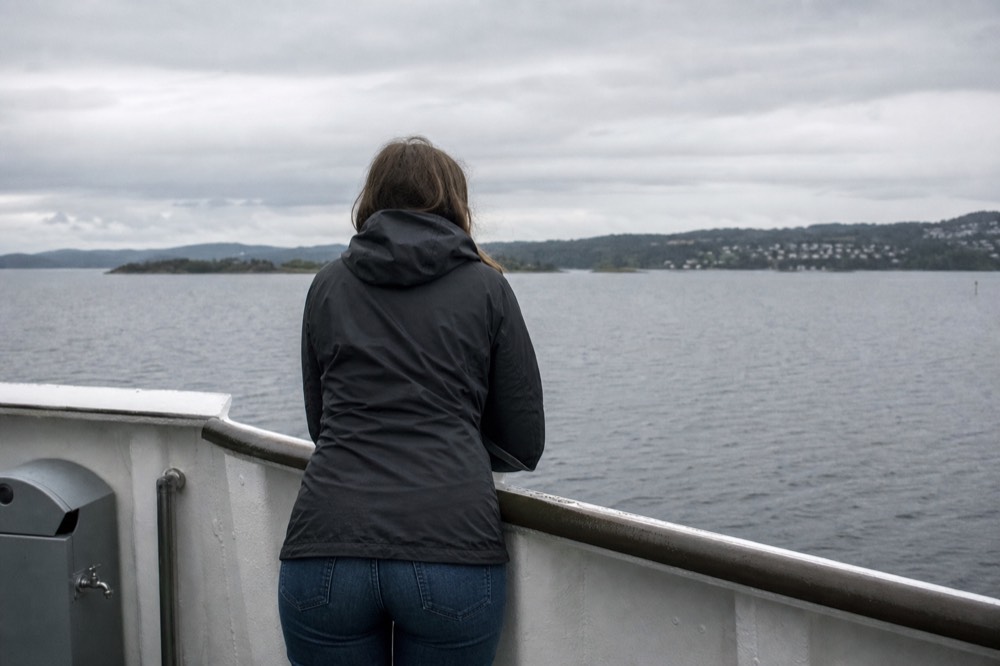
Yes, you can wear jeans in Norway. Walk down Karl Johans gate on any given afternoon and you will see them everywhere, on commuters, on students, on parents dragging sleds of toddlers toward the park. Norway is not a country that polices your trousers. What it does police, through sheer weather, is your preparation. A pair of jeans with the wrong layers around it can turn a beautiful fjord afternoon into a damp, cold two hours. The same jeans with a wool base layer underneath and a shell over the top will carry you from a morning museum to an evening boat trip without a single complaint.
That distinction, the jeans are fine, the layering is everything, is what this article is actually about. Below I cover when jeans work, when they quietly fail, what Norwegians themselves wear on the water, how to pack so one pair of trousers covers a whole Oslo trip, and what changes between a July visit and a February one. The short version, if you are reading this in a hotel lobby with a suitcase open in front of you: pack the jeans, pack a shell, pack a wool sweater, and stop worrying.
Can I Wear Jeans In Norway?
Yes, jeans are completely normal in Norway, in cities, on hikes, and on fjord boats. Norwegians wear denim year-round. The catch is that jeans hold moisture against your skin when they get wet, so in rain, sea spray, or cold wind, you need a waterproof layer over them or a warm layer under them.
Nobody in Oslo will look twice at your jeans. The country has a strong casual-dress culture, and denim is a default, not a compromise. You will see jeans under wool sweaters at galleries, jeans under rain shells on the harbor promenade, and jeans tucked into hiking boots on forest trails at the city's edge. Norway's dress code, to the extent it exists, is about function rather than formality, and denim fits that instinct perfectly.
Where travelers get caught out is treating jeans as weather gear. Cotton denim absorbs water and dries slowly, which matters on a small boat where spray and sudden showers are part of the deal, or on a winter day when slush lines every sidewalk. The fabric that feels tough and dependable in a shop feels very different after an hour of drizzle on an open deck. That is not a reason to leave the jeans home, it is a reason to build an outfit around them.
The practical version of the rule: jeans are a fashion choice in Norway, and a base layer and a shell jacket are the weather choice. Get the second part right and the first part takes care of itself. If you are curious how the weather shapes the whole trip, not just the wardrobe, our piece on the best month to visit the fjords goes into the seasonal trade-offs in detail.
If your jeans-and-layers plan includes time on the water, compare the boat’s indoor and outdoor spaces before choosing.
Sightseeing cruises are a substantial stretch outdoors if you stay on deck, so check the trip duration and dress for the conditions. Still, bring the shell. The silent electric boat has a heated cabin, the wooden sightseeing boats have an onboard bar, and the fjord itself has no shelter at all, so your jacket is the one ticket you cannot buy onboard.
What Should I Wear On The Boat?
Wear jeans or any comfortable trousers, plus closed shoes with grip, a warm mid-layer like a fleece or wool sweater, and a wind-and-waterproof outer shell. On open-deck boats the wind off the fjord is colder than the city air, and light rain is common, so the shell matters more than the trousers.
The deck of a sightseeing boat is a different microclimate than the quay you boarded from. You are moving through open water, often in the shade of the hills on either side of the fjord, and the breeze that felt refreshing at the harbor can feel cutting after twenty minutes. Operators know this, which is why several of the traditional evening cruises hand out warm blankets onboard, a small detail that tells you the locals take deck cold seriously even in summer. When the people who run these boats every single day stock blankets as standard equipment, that is a hint about the temperature you should plan for.
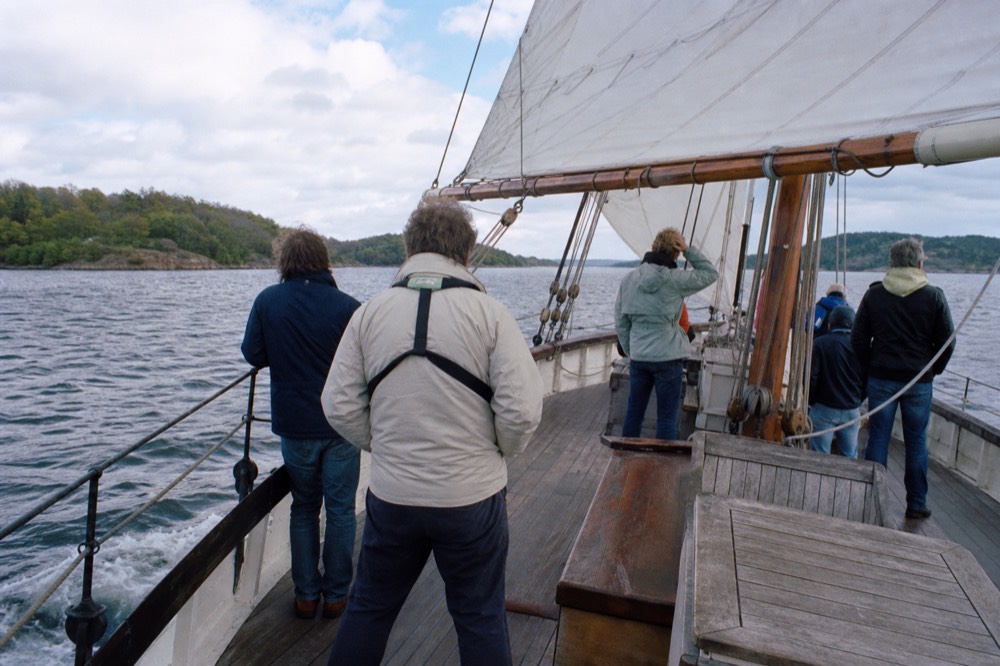
Shoes deserve more attention than trousers. Decks can be wet, and gangways are narrow with ridged metal treads. Sneakers are fine; smooth-soled dress shoes are not. If you are sailing on one of the traditional wooden ships, the Båtservice sailing cruises run two hours with a bar and refreshments onboard, but the main sightseeing deck is open-air, so dress for the wind even where heaters and blankets are provided. Shelter differs by boat; check your selected vessel rather than assuming every sailing ship has an enclosed passenger cabin.
The premium silent-electric boats solve the problem differently. The Brim Explorer guided sightseeing cruise, a product recorded at a 4.7 rating across 1775 reviews on its listing in September 2026, has a heated indoor saloon with panoramic windows, so you can move indoors between visits to the deck. You can Check availability for that one alongside our full Oslo fjord cruise guide.
A few small extras earn their place in your day bag. A hat that covers your ears does more for comfort than a heavier jacket, because wind moves across the water fast enough to strip warmth from your head before you notice it. Thin gloves help if you plan to stand at the rail taking photos for long stretches, since fingers stiffen first. A scarf or buff blocks the gap between your collar and your chin where the breeze likes to sneak in.
Think in layers rather than one heavy piece. A t-shirt, fleece, and shell gives you three settings to adjust as you move between the deck and the cabin, which beats a single thick coat you either wear or carry. Skip umbrellas entirely; on a moving boat they catch the wind and block other passengers' views, and a hood does the same job without the hassle. If rain is in the forecast, a dry bag or plastic sleeve for your phone keeps it usable for photos when the weather turns.
When Do Jeans Fail In Norway?
Jeans fail in three situations: heavy rain, deep winter slush, and long sweaty hikes followed by cold stops. Wet denim loses its insulation, stiffens, and chills your legs for hours. In those conditions Norwegians switch to wool or synthetic trousers, or pull a rain pant over the jeans.
The failure mode is always the same: water. A light drizzle shrugs off. A proper Norwegian shower does not. Once denim soaks through it stops insulating, and because it dries slowly you can spend the rest of the day in what amounts to cold, heavy legwear. In January and February, street slush does the same job from below, so locals who cycle or walk long distances often wear shell pants over their regular clothes and change at the destination. Office workers arrive dry, peel off a rain pant, and hang it by the coat rack, and nobody thinks twice about it.
The sweaty-hike problem is subtler. If you climb one of the hills framing the fjord in jeans, you will perspire into the cotton, and the moment you stop moving, that moisture turns cold against your skin. Hikers here repeat a phrase worth memorizing: cotton kills, wool warms. It is dramatic, but it is directionally correct, and it explains why the trails around Oslo are full of synthetic trousers even on warm days when jeans would look perfectly comfortable from the parking lot.
For a city-only trip, none of this should scare you off denim. Oslo center is compact, trams are warm, cafés are everywhere, and a soaked pair of jeans is a minor annoyance, not a crisis. You can duck inside, order a coffee, and be sociable again within the hour. The stakes rise on the water and on day trips into the hills, where shelter is further away and the weather has more room to play.
How Do Norwegians Actually Dress Day To Day?
Norwegians dress practically and casually: jeans or plain trousers, sneakers or hiking shoes, a wool or fleece mid-layer, and a good shell jacket, adjusted by season. The national uniform is function over fashion, and the one item locals never cheap out on is the outer layer.
There is a Norwegian word, "friluftsliv," that roughly means open-air life, and it shapes the wardrobe. Clothes are bought to withstand being outside, because being outside is the default plan, not the exception. You will see businesspeople in well-cut shells, toddlers in full rain sets splashing in puddles on purpose, and grandparents on forest trails in gear that would pass at a mountaineering shop. The philosophy is simple: the weather is not an obstacle to going out, it is just a variable to dress around.
The layering stack, from skin outward, looks like this:
| Layer | What it is | Norwegian approach | Works with jeans? |
|---|---|---|---|
| Base | Next to skin | Wool or synthetic, rarely cotton, in cooler months | Yes, thin wool leggings under jeans in winter |
| Mid | Insulation | Fleece or wool sweater, light down vest in the city | Yes, worn over jeans, under shell |
| Outer | Weather protection | Waterproof, windproof shell jacket, rain pants when needed | Yes, shell over jeans is the standard setup |
| Feet | Grip and dryness | Sneakers in town, hiking shoes or rubber boots off-road | Independent of trousers |
Notice the pattern: the trousers are the flexible part of the system. Jeans, canvas trousers, softshell pants, all of them work, because the base and outer layers do the thermal heavy lifting. A good shell and a wool sweater make the outfit more adaptable, but jeans still dry slowly if your legs get wet. If you pack five cute tops and no shell, your jeans become a liability the first time the sky opens.
One more observation from the streets: Norwegians re-wear clothes without apology. A wool sweater worn three days running is normal, because wool handles it. If your packing instinct says bring more outfits, redirect that space toward better layers instead, and you will fit in better than any amount of new denim would.
What Should I Pack For A Summer Trip To Oslo?
Pack jeans plus a second lighter trouser, a wool or fleece mid-layer for evenings, a packable waterproof jacket, and comfortable walking shoes. Oslo summer days are mild but evenings on the fjord get genuinely cool, and rain can arrive any day, so plan for a spread of conditions rather than one average temperature.
Summer packing is where visitors overcorrect. They read "Norway" and pack for the Arctic, then spend July overheating in a parka. The reality is that an Oslo summer day is pleasant for walking, often in the high teens Celsius, with long daylight stretching well into the evening. What surprises people is the drop after sunset, especially near open water. A fjord cruise that left the dock in t-shirt weather can end with everyone huddled behind the windbreak, and the walk back to the hotel feels ten degrees colder than the walk to the boat did.
The fix is simple: keep a mid-layer and a light shell in your daypack at all times, even when the morning looks flawless. The weather in this part of the country changes faster than forecast apps admit, and locals treat a carried layer as an accessory, not a burden. If your itinerary includes an evening on the water, the shrimp buffet evening cruises hand out blankets onboard, but a jacket of your own is still the better bet.
For footwear, one pair of broken-in sneakers covers the city. Add a second pair only if you plan proper hiking. Sandals are fine for café days but useless on a boat deck with spray coming over the side, and they are worse on the wet gangway down to the dock, which is where every cruise starts whether you dressed for it or not.
Is A Fjord Cruise Cold Even In Summer?
It can be. On an open deck moving across the Oslofjord, wind chill makes the air feel several degrees colder than on land, and evening departures drop further. Heated indoor cabins and supplied blankets can improve comfort, but a warm layer is still smart for the outer deck photo sessions.
Every experienced fjord cruiser eventually learns the same rhythm: you go out on deck for the view, you come back inside to thaw, you go out again. The boats that make this easy are the ones worth prioritizing. The silent electric sightseeing cruises have heated saloons with big windows, so you never miss the scenery while warming up. The traditional wooden sightseeing boats offer a different setup: an open-air main deck with heaters and blankets, so warm layers still matter.
The two-hour format most of these cruises share is deliberately forgiving. Dress for the forecast and the time you expect to spend outside, and use indoor shelter if you become cold. The hat matters more than people expect: your head and neck are exposed to the wind, and a cap that fits in a pocket is the highest-value item in your day bag. Add gloves for an evening departure and you have covered the two body parts that complain first.
For a fuller comparison of what each cruise type offers, from sailing ships to silent electric boats, see whether an Oslofjord cruise is worth it. If you are still choosing between boats, compare enclosed indoor viewing with an open-deck sightseeing setup.
Whichever you pick, the outfit advice does not change: jeans are fine, the shell is mandatory, and you should check the actual indoor space or open-deck setup of the boat you book.
What Should I Wear In Winter In Norway?
In winter, wear jeans only over a thermal base layer, or switch to lined or wool trousers, and always add serious boots, a warm coat, a hat and gloves. Norwegian winters are cold with icy sidewalks and slush, so insulation under your denim and grippy soles under your feet are non-negotiable.
Winter changes the equation. The jeans themselves are still acceptable, nobody is judging, but bare denim against winter air is a thin barrier, and slush soaks hems fast. The local solution is either thermal leggings worn underneath, which is common and invisible, or proper winter trousers for the coldest spells. Boots need real soles: Oslo sidewalks are gritted but patches of ice survive, and falling in front of a tram is a uniquely Norwegian embarrassment that no amount of denim dignity can rescue.
On the water in winter, sightseeing departures thin out but the fjord is at its most atmospheric, low sun, dark water, snow on the islands. Dress as if you will stand still outdoors for two hours, because on a winter cruise you largely will, and the heated cabin boats become the obvious choice. The same silent electric cruise that keeps summer visitors cool and comfortable keeps winter visitors warm and dry, which is a rare bit of packing simplicity in a country that otherwise demands seasonal wardrobe overhauls.
Common Questions About Wearing Jeans In Norway
Yes, jeans are perfectly fine to wear in Norway year-round, and most Norwegians wear them regularly. In winter, pair them with thermal base layers for warmth, and bring waterproof options or rain gear for wet weather. For hiking or outdoor activities, quick-drying synthetic pants work better, but for cities, towns, and everyday life, jeans are a normal, practical choice.
Are jeans warm enough for a fjord cruise?
Usually, if you add layers. On boats with heated cabins or supplied blankets, jeans plus a sweater are comfortable most of the year. On open-deck winter cruises, wear thermal leggings underneath or choose lined trousers instead.
Do Norwegians wear jeans hiking?
Some do on easy forest paths, but most prefer synthetic or wool hiking trousers because cotton denim soaks up sweat and rain and then stays cold. For anything longer than a stroll, leave the jeans at the hotel.
What shoes should I bring to Norway?
Comfortable sneakers with decent grip for the city, and waterproof walking shoes or light hiking boots if you plan trails or boat decks. In winter, insulated boots with grippy soles are essential for icy sidewalks and slush.
Is a rain jacket enough, or do I need rain pants?
A rain jacket covers most city trips and summer cruises. Rain pants earn their space on wet-season hiking days, bike commutes, or if your jeans getting soaked would ruin the afternoon, since denim dries slowly once wet.
What is the one clothing rule for Norway?
Layer, and spend your budget on the outer shell. Trousers, including jeans, are flexible; the waterproof jacket and the wool mid-layer are what actually decide whether you enjoy the fjord or endure it.
One last thought from Oslofjord Cruises: the best-dressed person on any fjord boat is never the one with the nicest outfit, it is the one who packed a hat. Wear your jeans proudly, bring the shell, and the fjord will do the rest.
Match The Day To Your Plans
Editorial starting point. Confirm your party's age, access needs and departure details on the listing.
2-Hour Oslo Fjord Sightseeing Cruise by Sailing Ship: English audio commentary, blankets and an open-air wooden boat; refreshments extra 2 hours. Rådhusbrygge 3, Oslo; return to the same pier. Confirm party ages, mobility requirements and the exact departure on the selected listing.
Oslo Fjord Evening Cruise with Shrimp Buffet on a Sailing Ship: Shrimp buffet included; drinks and hotel transport extra 3 hours. Central Oslo waterfront; confirm the exact pier on your ticket; return to Oslo. Confirm party ages, mobility requirements and the exact departure on the selected listing.