Which Fjord Is Closest To Oslo?
The closest fjord to Oslo is the Oslofjord itself, the arm of water the city sits directly on. This guide explains what that means in practice, what you see on the water, and how the famous west-coast fjords compare.
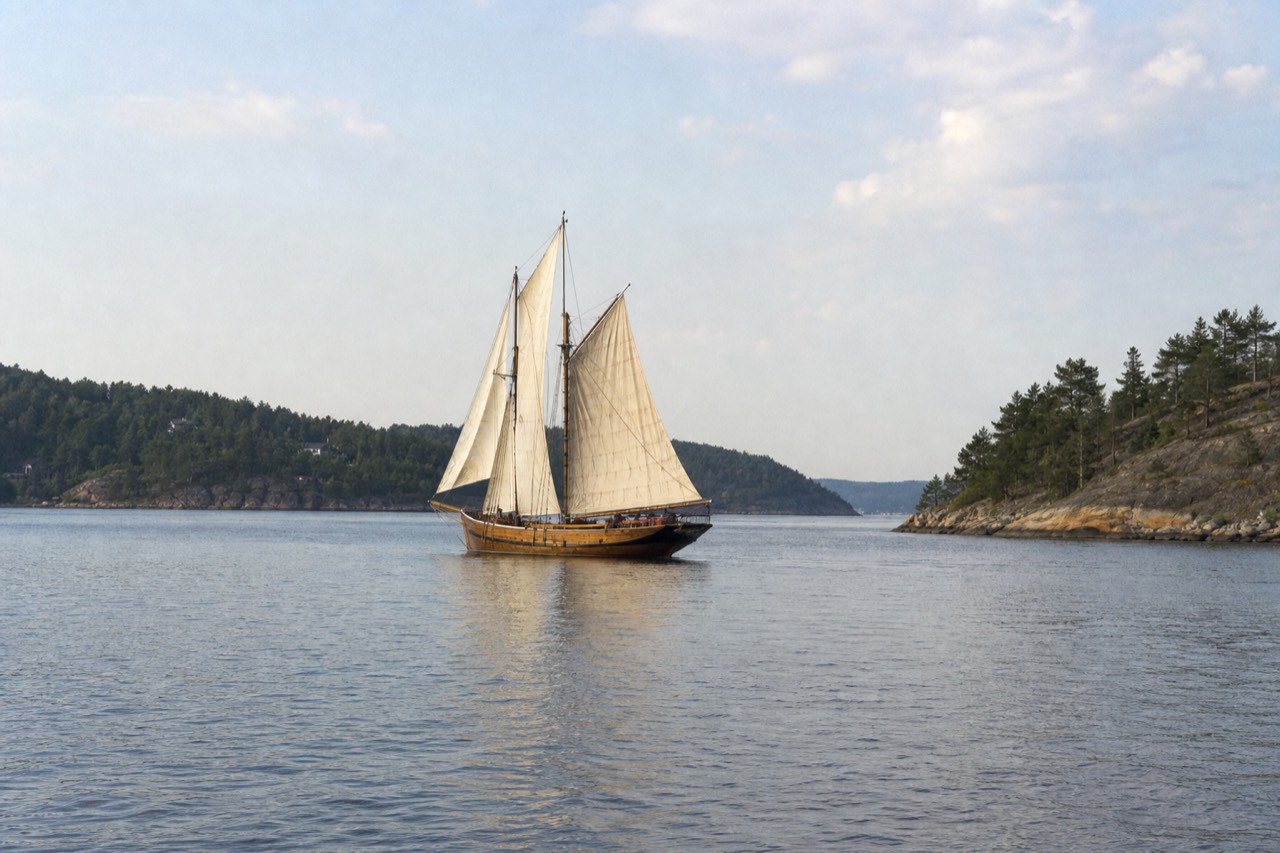
Ask most people to picture "the Norwegian fjords" and they imagine the towering cliffs of the west coast. Ask a map and it gives you a refreshingly blunt answer: the closest fjord to Oslo is the one the city is built around. The Oslofjord starts, quite literally, at the waterfront outside the Oslo Opera House, and it runs south through islands, lighthouses and wooded shores until it opens to the sea. You do not need to travel to reach a fjord from Oslo. You need to walk about ten minutes from the main street and step onto a boat.
That distinction matters for trip planning more than most visitors expect. Norway's headline fjords, the Sognefjord, the Hardangerfjord, the Geirangerfjord, sit on the far side of a mountain range, reached by long rail, road and ferry combinations. The Oslofjord is a different animal: narrower, gentler, dotted with summer houses and swim-ready islands, and cruised daily by sightseeing boats that depart from piers in the city center. This article explains exactly what the Oslofjord is, what you actually see from the water, which cruise options are worth your time, and when it makes sense to push west instead.
Which Fjord Is Closest To Oslo?
The closest fjord to Oslo is the Oslofjord itself. The city sits directly on its northern shore, so there is no travel distance at all: the fjord begins at the downtown waterfront, and sightseeing cruises depart from piers within a short walk of the main sights. Every other major Norwegian fjord lies on or near the west coast and requires a long overland journey.
That answer surprises people who assumed a fjord must involve vertical drama. The Oslofjord is a fjord in the geographic sense, a long inlet of sea cutting deep into the land, but it is a soft, inhabited one. Its shores rise into wooded hills rather than sheer rock walls, and its waters are threaded with islands that Oslo residents treat as their summer backyard. What you lose in spectacle you gain in accessibility and in a genuinely local experience: this is the fjord Norwegians from Oslo actually use, swimming off its rocks in July, sailing its channels on weekends, eating shrimp on its ferries.
The practical consequence is simple. If your Norway itinerary includes Oslo and you want to say you cruised a fjord, you can do it on the same afternoon you arrive, without booking trains or renting a car. Sightseeing boats leave from central waterfront piers, run for roughly two hours and return you to the center with the evening still ahead of you. The exact meeting point depends on the operator. That is a claim no west-coast fjord can make from Oslo.
There is a subtlety worth knowing before you plan around the word "fjord" itself. Geographers actually debate whether the innermost stretch of the Oslofjord qualifies, because some definitions reserve the term for glacially carved valleys flooded by the sea, and the inner basin around the city center is broader and shallower than the classic textbook example. The outer reaches, the deep channels south of the islands, are unambiguously fjord by any measure. For a traveler this debate changes nothing: the water you cruise from the city piers is the same fjord arm that reaches the open sea, and the boats that carry you across it are the same whether the map labels the northern mile a fjord or a harbor inlet.
If you are weighing the Oslofjord against the big-name fjords, it helps to know what each is for. The Oslofjord is for easy, atmospheric time on the water close to the city. The west-coast fjords are for the once-in-a-lifetime scenery, budgeted as a multi-day trip in themselves. Treating them as substitutes leads to disappointment in both directions; treating them as two different experiences lets you enjoy the Oslofjord for what it is, which is one of the most accessible fjords in the country.
Can You Cruise The Oslofjord Straight From Central Oslo?
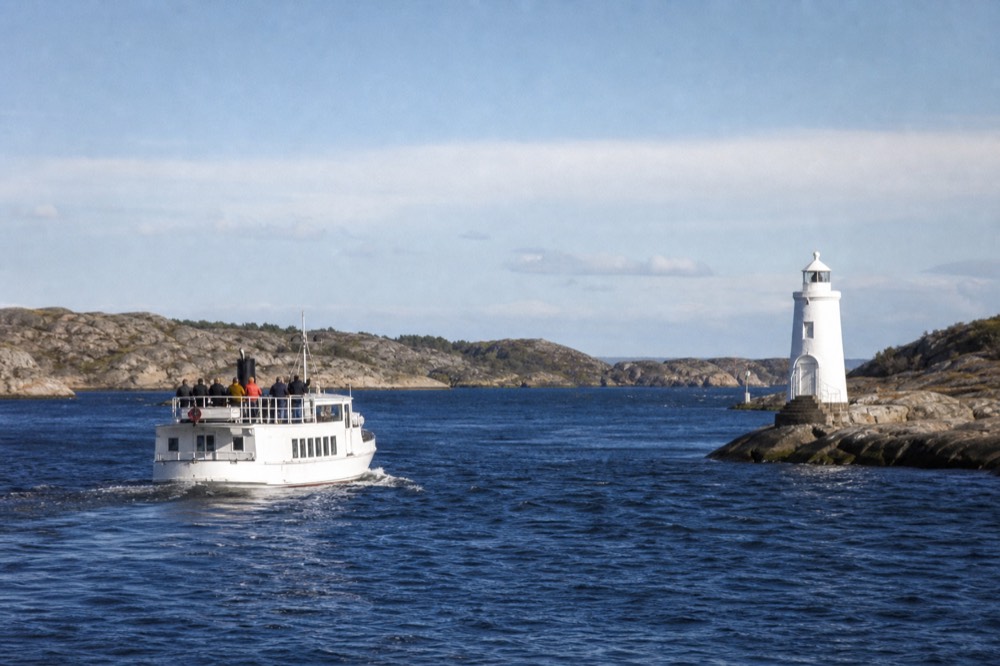
Yes. Sightseeing cruises on the Oslofjord depart from piers in central Oslo, with the exact pier depending on the operator, and run for about two hours on the water with no transfers, no driving and no advance logistics beyond a ticket. Several operators run daily departures in season.
This is the part visitors consistently underestimate. There is no harbor shuttle, no suburban drive to a distant marina, no ferry terminal an hour from town. You finish your coffee by the opera house, walk to the pier, and the fjord opens up in front of you within minutes of casting off. The boats trace the inner harbor first, past the fortress and the new waterfront developments, then swing south past Hovedøya and the other near islands before turning back. Two hours is the standard loop, and it is enough to see the character of the fjord without eating your whole day.
Two styles of boat dominate, and choosing between them is really choosing between two moods. Brim Explorer runs modern hybrid-electric vessels, near-silent on the water, with guided commentary and a café serving pastries and drinks; their guided sightseeing cruise holds a 4.7 rating from 1775 reviews on its listing as of September 2026, the strongest of the featured options. Båtservice Sightseeing runs traditional wooden sailing ships, tall-masted and photogenic, with a bar and refreshments onboard; their classic sailing cruise carries a 4.5 rating across a hefty 5881 reviews, current as of the same check. The electric boats feel sleek and contemporary, the wooden ships feel like stepping into a maritime painting, and both deliver the same fjord.
A comparison of the main cruise styles, using the currently listed figures:
| Cruise | Style | Duration | Rating | Reviews |
|---|---|---|---|---|
| Guided sightseeing on premium silent boat (Brim Explorer) | Silent electric, guided | 2 hours | 4.7 | 1775 |
| Traditional sailing cruise on wooden boat (Båtservice) | Wooden sailing ship | 2 hours | 4.5 | 5881 |
| Fjord-style dinner cruise (Trollcruise) | Wooden ship, seated dinner | 4 hours | 4.2 | 441 |
| Evening cruise with shrimp buffet (Båtservice) | Wooden sailing ship, buffet | 3 hours | 4.1 | 182 |
| Sustainable cruise with audioguide | Electric, audio commentary | 1.5 hours | 4.1 | 120 |
Prices for individual departures are shown on the operator's live listing, and they move with the season, so treat the table as a shape of the market rather than a quote. The pattern worth noticing: the electric boats and the wooden ships are priced in the same band, so your choice can honestly come down to whether you want silence and glass walls or canvas and varnished wood.
Departure frequency is the other practical detail. In high summer the main sightseeing runs leave multiple times a day, which means a spontaneous decision at breakfast can still become a cruise by early afternoon. In shoulder season the schedule thins, and in winter some products pause entirely while the enclosed boats carry on. Whatever the month, checking the live listing for your dates beats assuming, because the calendar on the operator's page is the only schedule that reflects reality.
How Far Are The Famous West-coast Fjords From Oslo?
The headline fjords, including the Sognefjord, the Hardangerfjord and the Geirangerfjord, all lie on Norway's west coast, on the other side of the mountain divide from Oslo. Reaching them involves long rail and road connections. A multi-day visit is more relaxed, while the verified Nærøyfjord roundtrip from Oslo takes about 22 hours and returns by overnight train.
The Norway in a Nutshell route is the classic way to bridge that gap, stitching together the scenic Bergen railway, the Flåm railway and a stretch of the Aurlandsfjord into a loop that can be done in one very long day or, far better, two. But the key word is "day". The west-coast fjords are not a morning excursion from Oslo in any honest sense of the phrase, and travelers who try to compress them into a day trip usually spend more time in transit than in front of the scenery. If your time in Norway is short and Oslo-based, the Oslofjord cruise is the fjord experience that actually fits.
That is not a consolation prize. It changes the calculus of your itinerary. A visitor with three days in Oslo can cruise the Oslofjord on day one, spend day two on the museums and the opera house, and still consider a west-coast fjord only if willing to restructure the whole trip around it. We break down exactly when that restructuring is worth it in our piece on day trips from Oslo to the fjords, and if you are dreaming about the marquee names, our guide to the prettiest fjord in Norway ranks the heavyweights honestly.
The mental model that helps most: think of Norway as two fjord worlds. The western world is the postcard, vertical, remote, expensive in time. The eastern world, the Oslofjord, is the everyday fjord, the one woven into a capital city's life. Both are real fjords. Only one of them is walking distance from your hotel.
What Do You Actually See On The Boat?
An Oslofjord cruise passes the Akershus fortress, the opera house and the city waterfront, then the green near-islands of the inner fjord, including Hovedøya, along with lighthouses, wooded shorelines, summer houses and small marinas, all within a compact two-hour loop from the center.
The first ten minutes are the architectural warm-up: the glass slope of the opera house, the brick silos of the revitalized harbor, the medieval walls of Akershus sliding past at water level in a way you never see them from land. Then the city thins out and the fjord's real personality appears. The near islands sit close enough to see picnickers on the rocks in summer. Sailboats tack between the channels, because this is a working recreational fjord, not a museum piece. On the outer stretches, lighthouses and low headlands give the water a sense of opening toward the sea.
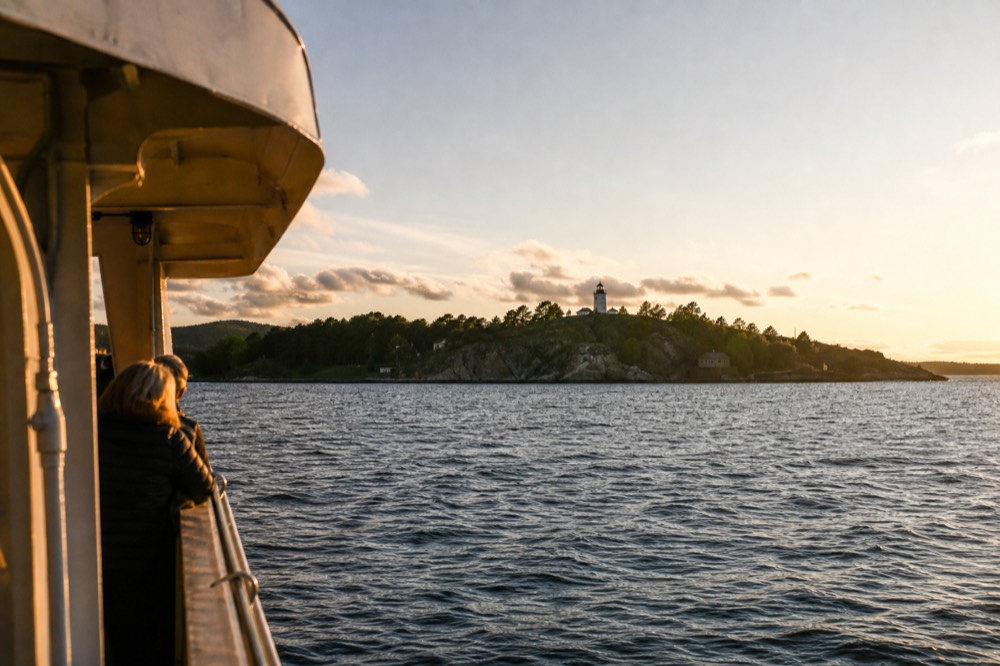
What surprises most first-timers is how quickly the city disappears. Within twenty minutes of the pier you are looking at pine-covered islands and wooden houses at the water's edge, and downtown Oslo is a low silhouette behind you. The cruise operators lean into this: commentary on the guided boats covers both the city sights and the natural history of the fjord, and the café or bar onboard turns the return leg into something closer to a social hour than a shuttle ride. Bring a layer even in summer; the water is cool and the breeze on deck is constant.
The islands themselves deserve a mention, because they are the visual heart of the trip. Hovedøya, the closest of them, carries monastery ruins and swimming coves, and its beaches fill with locals on any warm day. Further out, the chain of islands continues toward the fjord's wider southern reaches, where the shoreline turns to summer houses, marinas and stands of pine running down to the water. Some full-day island tours even build a whole itinerary around hopping between them, with time to swim if the weather cooperates. On a standard two-hour cruise you see these places from the deck rather than setting foot on them, which is exactly why many visitors end up doing both: the cruise first, then a ferry to an island on another afternoon.
Onboard cafés sell refreshments on some departures; check the selected cruise’s inclusions if food or drinks matter to your plan.
Which Cruise Should You Pick For Your Trip?
Pick the silent-electric guided cruise for the best overall experience, the traditional wooden sailing ship for atmosphere and photos, the shrimp buffet or dinner cruise for an evening out, and the shorter electric run if you are tight on time or traveling with restless children. All depart from central Oslo and last between ninety minutes and four hours.
The decision is less about quality than about mood, because the ratings across the featured options cluster tightly between 4.1 and 4.7. If you want commentary, comfort and a modern boat, the Brim Explorer guided cruise is the clear default; its 4.7 rating across 1775 reviews, as of September 2026, reflects a polished, reliable product. If the boat itself is the point, the wooden sailing ships deliver something the electric vessels cannot: canvas overhead, varnished wood underfoot, and the slow theatre of a tall ship working the fjord. Photographers and romantics should choose wood without hesitation.
Families and short-stay visitors have good middle options. The ninety-minute sustainable cruise with audioguide covers the essentials in a compact window and starts from 46 USD, the lowest featured price point. Evening travelers can upgrade the same fjord into dinner: the three-hour shrimp buffet cruise on a sailing ship is the classic Norwegian summer evening, blankets provided, and the four-hour fjord-style dinner cruise makes a full occasion of it. For groups, a private charter from 1795 USD per group of up to seven turns the fjord into your own deck.
One planning note that matters more than any of the above: departure times and availability vary by date. Book the specific departure you want rather than deciding at the pier, and check the cancellation terms on the operator's live listing so you keep flexibility if your Oslo plans shift.
A quick way to sanity-check your choice: ask what you want to remember a year from now. If the answer is "the fjord looked incredible", the silent boat's glass walls and quiet deck serve that memory best. If it is "we sailed a wooden ship at sunset", the sailing cruise wins before you even read another review. And if it is "we had the best shrimp of our lives on the water", the evening buffet cruise is not a detour from the fjord experience, it is the fjord experience, Norwegian style.
When Is The Best Time Of Year To Cruise The Oslofjord?
Summer, roughly June through August, is the best time to cruise the Oslofjord: departures are most frequent, the islands are at their greenest, evenings stay light late, and the water is warm enough that you will see people swimming off the rocks. Late spring and early autumn also work well, with fewer crowds and quieter boats.
The Oslofjord is a seasonal fjord in a way the west-coast fjords, which run year-round tourism infrastructure, are not. Midsummer is peak for a reason: the light lasts nearly around the clock in late June, the shrimp buffet season is in full swing, and the evening cruises turn golden at hours that feel unreasonable anywhere further south. The trade-off is demand, which is exactly why the popular departures fill first. Shoulder season, particularly September, trades a few degrees of warmth for emptier decks and a fjord in its autumn colors, and the sightseeing runs keep operating while the weather holds.
Winter cruising exists but is a different product: shorter days, bundled-up decks, and a moody, monochrome fjord that some travelers love and others find bleak. If your trip falls in the cold months, the enclosed electric boats are the comfortable choice, and the fjord-view-from-glass experience is its own quiet pleasure. For the fuller seasonal picture across all of Norway's fjord country, see our month-by-month guide to the best time to visit the fjords.
Common Questions About Fjords Near Oslo
The questions below cover what readers ask most about fjords near Oslo: whether the Oslofjord counts as a real fjord, how it compares with the west-coast names, and the practical details of cruising it from the city center. Each answer is short and drawn from the same verified listings and geography covered above.
Which fjord is closest to Oslo?
The Oslofjord. Oslo sits directly on its northern shore, so the closest fjord is the one the city faces, and sightseeing cruises depart from piers in the center within a short walk of the main sights.
Is the Oslofjord a real fjord?
Yes. It is a long inlet of the sea cutting into the land, which is what defines a fjord. It is simply a gentler, more inhabited one than the cliff-walled fjords of the west coast, with wooded shores and islands rather than vertical rock faces.
Can you see the west-coast fjords on a day trip from Oslo?
For the western fjords, expect a very long journey across the mountain divide, with different fjords requiring different routes. A multi-day visit is more relaxed; a verified 22-hour rail-and-cruise roundtrip reaches Nærøyfjord with an overnight train return to Oslo.
How long is an Oslofjord cruise?
Most sightseeing cruises run about two hours. Shorter electric options last around ninety minutes, evening buffet cruises run three hours, and the dinner cruise takes four hours.
Do Oslo fjord cruises run in winter?
Yes, with fewer departures and a very different atmosphere. The enclosed electric boats are the comfortable winter choice, offering fjord views from inside glass-walled cabins on short, cold days.
Which Oslofjord cruise is best for families?
The ninety-minute electric cruise with audioguide suits restless younger children, while the two-hour guided silent-boat cruise works well for families who want commentary and café snacks onboard. Both depart from central piers.
The short version: the fjord closest to Oslo is the one already at your feet. Cruise it while you are there, and save the west-coast giants for a trip with the days to do them justice. More on planning that split, along with everything else fjord-related, lives at Oslofjord Cruises.
Match The Day To Your Plans And Compare Costs
Editorial starting point. Confirm your party's age, access needs and departure details on the listing.
2-Hour Oslo Fjord Sightseeing Cruise by Sailing Ship: English audio commentary, blankets and an open-air wooden boat; refreshments extra 2 hours. Rådhusbrygge 3, Oslo; return to the same pier. Confirm party ages, mobility requirements and the exact departure on the selected listing.
Self-Guided 22-Hour Round Trip From Oslo To Sognefjord With Flåm Railway: Bergen Railway; Flåm Railway itinerary; Aurlandsfjord and Nærøyfjord cruise; Connecting bus; Sleeping compartment only if selected 22.0 hours. Oslo Central Station, Jernbanetorget 1; arrive 20 minutes before ticketed departure; Oslo Central Station after overnight return train. Nonrefundable. Train tickets are subject to confirmation, which may take up to 48 hours; departure time may change. Confirm accessibility and infant arrangements for every connection.
Compare Your Actual Quotes
Use the same currency for both totals, including transport, meals and activities. This compares your quotes, not live prices.
Compare transport, included meals, guiding and time arranging connections.